

What are the Different Types of Partial Dentures?
Posted by Ethan Parker on
- November 13, 2026
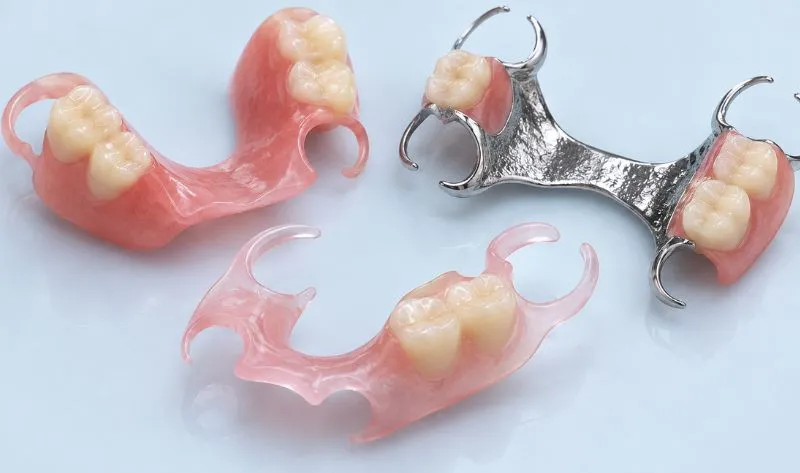
Table of Contents

- What is a Partial Denture?
- Comparing Different Types of Partial Dentures
- Types of Partial Dentures by Material
- Types of Partial Dentures by Purpose
- Types of Partial Dentures by How They Stay in Place
- Types of Partial Dentures by Position in the Mouth
- What About Fixed Partial Dentures?
- Which Type of Partial Denture is Best for You?
- How Much Do Partial Dentures Cost in the UK?
- How Long Do Partial Dentures Last?
- How to Care for Each Type of Partial Denture
- Conclusion
- Frequently Asked Questions
The main types of removable partial dentures are acrylic, cobalt chrome and flexible. Each one replaces missing teeth while your remaining natural teeth stay in place, but they differ in strength, comfort, appearance and cost.
The right choice depends on where your gaps are, the health of your remaining teeth, how long you need the denture and your budget. This guide explains each type and helps you decide which one may suit you.
What is a Partial Denture?
A partial denture is a custom-made denture that replaces one or more missing teeth when some natural teeth remain. Unlike full dentures, which replace every tooth in an arch, a partial denture fills only the gaps.
As well as improving your smile, a partial denture can make chewing and speaking easier. It can also help stop nearby teeth drifting into the empty space.
Parts of a Partial Denture
- Replacement Teeth: These fill the gaps and are matched to the shade and shape of your natural teeth.
- Base: This holds the replacement teeth and rests on your gums. It may be made from acrylic, metal or flexible nylon.
- Clasps: These grip nearby natural teeth to hold the denture in place. They may be metal or gum-coloured.
- Rests and Connectors: Found mainly on metal designs, these help spread biting pressure and link the different parts of the denture.
Comparing Different Types of Partial Dentures
| Type | Strength | Comfort | Appearance | Repairs | Typical Lifespan |
|---|---|---|---|---|---|
| Acrylic | Moderate | Can feel bulky | Natural, but metal clasps may show | Usually simple | 3–5 years |
| Cobalt Chrome | High | Slim and stable | Natural, but clasps may show | Possible, depending on the damage | 5–10 years |
| Flexible | Moderate | Soft and lightweight | Discreet, with gum-coloured clasps | Often difficult | 3–7 years |
The lifespan ranges are a general guide. How long your denture lasts depends on your mouth, the design and how well you look after it.
Types of Partial Dentures by Material
Acrylic Partial Dentures
An acrylic partial denture has a gum-coloured plastic base that holds the replacement teeth, often with small wire clasps for extra hold. It is usually the most affordable type and is often used short term, although some people wear it for longer.
Cobalt Chrome Partial Dentures
This type has a thin, strong metal framework, with replacement teeth and gum-coloured acrylic attached to it. It can feel slimmer than acrylic and is often chosen for long-term wear and for replacing back teeth.
Flexible Partial Dentures
A flexible partial denture is made from a thin nylon-based material, and Valplast is one well-known example. It usually has gum-coloured clasps instead of metal ones, so it can look discreet and feel light in the mouth.
Combination Partial Dentures
A combination partial denture uses more than one material, such as a metal framework with acrylic teeth and a gum-coloured base. Some designs also add flexible clasps to improve the appearance.
Scandinavian Design Chrome Dentures
This is a minimal type of cobalt chrome denture designed to cover less of the mouth and reduce visible metal. It needs careful planning and may not suit every case.
Types of Partial Dentures by Purpose
Temporary or Immediate Partial Dentures
These dentures are used while your mouth heals, often after a tooth has been removed. Your gums change shape during healing, so the denture may need adjusting, relining or replacing later.
Flipper Dentures
A flipper denture is a simple, lightweight acrylic partial denture that usually replaces one or a few teeth. It is often worn as a short-term way to cover a visible gap.
Long-Term Partial Dentures
A long-term partial denture is designed for everyday wear over several years. Cobalt chrome is often chosen for this purpose, but acrylic or flexible designs may also suit some people.
Copy Partial Dentures
A copy partial denture replicates an existing denture that already fits and feels right. It can be useful when you like your current denture but need a replacement because of wear or damage.
Types of Partial Dentures by How They Stay in Place
Partial Dentures With Metal Clasps
Metal clasps grip nearby teeth and offer a secure hold, although they can show when you talk or smile.
Partial Dentures With Gum-Coloured Clasps
These clasps blend in with your gums and are often used on invisible dentures.
Partial Dentures With Precision Attachments
Precision attachments connect the denture to specially prepared teeth or crowns, so they are less visible. They involve more planning and usually cost more.
Implant-Supported Partial Dentures
Implants can give a partial denture extra stability. The implants must be placed by a dental practice before the denture is fitted.
Types of Partial Dentures by Position in the Mouth
Partial Dentures for Front Teeth
Appearance is the priority at the front of the mouth. The replacement teeth should match your natural teeth, and clasps should be placed as discreetly as possible.
Partial Dentures for Back Teeth
Back teeth take more chewing pressure, so strength and stability matter most. A metal framework is often preferred.
Upper Partial Dentures
An upper partial denture may cover part of the roof of your mouth. This can provide extra support, but it may affect your speech at first.
Lower Partial Dentures
A lower partial denture has less surface area for support and must leave enough space for your tongue, so a precise fit is especially important.
Partial Dentures for Gaps With No Tooth Behind
If the gap is at the very end of your teeth, there is no natural tooth behind it for support. The denture then rests partly on your gum, so it may rock more without a well-planned design.
What About Fixed Partial Dentures?
“Fixed partial denture” usually means a dental bridge. A bridge is fixed in place and supported by nearby teeth or implants, so you do not take it out. These fixed options are provided by a dental practice, not a denture clinic.
Which Type of Partial Denture is Best for You?
No single type is best for everyone. This guide can help you narrow down your choices before your consultation:
- Short-Term Need or Tight Budget: Acrylic is often the most practical choice.
- Long-Term Wear and Stronger Chewing: Cobalt chrome is often the first option to consider.
- Concern About Visible Metal: Flexible clasps or a carefully planned design may suit you.
- Sensitive Gums: A flexible denture or a soft lining may feel more comfortable, depending on suitability.
- Acrylic or Metal Allergy: Discuss your allergy so that a suitable material can be chosen.
- More Teeth May Be Lost Later: Choose a design that can be altered, such as acrylic or a suitable metal framework.
How Much Do Partial Dentures Cost in the UK?
Simple acrylic partial dentures are generally more affordable, while those with a metal framework tend to cost more. What you pay can also vary by provider. The final price usually depends on:
- Number of Teeth: More replacement teeth can increase the cost.
- Material: Metal and flexible materials often cost more than standard acrylic.
- Design: Precision attachments and more complex designs add to the price.
- Laboratory Work: The level of detail and turnaround time can affect the cost.
- Aftercare: Ask whether adjustments, relines and repairs are included.
How Long Do Partial Dentures Last?
Acrylic partial dentures often last around 3–5 years, flexible designs around 3–7 years and cobalt chrome around 5–10 years. Several things can shorten this:
- Changes in Your Mouth: Your gums and jawbone naturally change after tooth loss.
- Further Tooth Loss: Losing a supporting tooth can affect the design and fit.
- Daily Wear: Teeth and clasps can wear down or loosen.
- Accidents: Dropping the denture can cause cracks or breaks.
- Poor Cleaning: Plaque can harm the denture and your natural teeth and gums.
A reline may be enough if the denture has become loose but is otherwise in good condition. Replacement may be better if it is badly worn or no longer fits your remaining teeth.
How to Care for Each Type of Partial Denture
Clean your partial denture every day with a soft brush and a non-abrasive denture cleaner. Rinse it after meals where you can, and clean your natural teeth and gums too. Most people should take it out at night and keep it moist, unless their denturist advises otherwise.
- Acrylic: Clean it over a bowl of water or a folded towel, because it can crack if dropped.
- Cobalt Chrome: Clean carefully around the clasps and the natural teeth they touch, and avoid bending the clasps.
- Flexible: Ask which cleaner is safe for your material, and avoid hot water, which may affect its shape.
Repairs, Relines and Adding Teeth
What can be done depends on the material and the damage:
Type | Repairs | Relining | Adding a Tooth |
Acrylic | Usually simple | Usually possible | Usually possible |
Cobalt Chrome | Often possible, depending on the framework | Often possible on acrylic areas | Often possible, depending on the design |
Flexible | Often difficult | Often difficult | Often difficult |
Avoid household glue or home repair kits, because they can damage the denture and irritate your mouth. If a tooth, clasp or base breaks, arrange professional denture repairs.
Conclusion
The main types of partial dentures are acrylic, cobalt chrome and flexible, and each offers a different balance of cost, strength, comfort and appearance. The best choice depends on your gaps, your remaining teeth and how you want the denture to fit into daily life.
If you are unsure which type is right for you, our denturists at H&A Denture Clinic can explain your options for partial dentures in Peterborough. Book a free consultation or call 07899 828 935.
Frequently Asked Questions
What is the most comfortable type of partial denture?
Many people find flexible partial dentures the most comfortable because they are soft and lightweight. However, a well-fitting cobalt chrome denture can also feel very comfortable because it is slim. Fit matters as much as material.
What is the strongest type of partial denture?
Cobalt chrome is usually the strongest removable option because of its metal framework. It is often chosen for long-term use and back teeth, where chewing pressure is higher.
What is the most natural-looking type of partial denture?
Flexible partial dentures often look very natural because their clasps are gum-coloured. However, any type can look natural if the teeth are well matched and the clasps are carefully placed.
What is the difference between a flipper and a partial denture?
A flipper is a type of partial denture. It is usually a simple acrylic design for short-term use, while other partial dentures are generally made to be stronger for everyday wear.
Can a partial denture replace just one tooth?
Yes. A partial denture can replace a single missing tooth at the front or back of your mouth. The best material depends on how visible the gap is and how long you need the denture.
Can partial dentures damage natural teeth?
They can contribute to problems if they fit poorly or are not kept clean. Plaque can collect around clasps and raise the risk of decay and gum problems, so good cleaning and regular fit checks are important.
Can I sleep with my partial denture?
Most people should take their partial denture out at night. This gives your gums a rest and allows a thorough clean. Follow any different advice you are given, particularly after an extraction.
Can a tooth be added to a partial denture?
Often, yes. Acrylic dentures are usually the easiest to change, and many metal designs can also be altered. Flexible dentures are often more difficult.
Can flexible partial dentures be repaired?
Some can be repaired, but many are difficult to fix because of the material. A serious break may mean the denture needs replacing.
Can a partial denture be made without clasps?
Yes, some designs avoid metal clasps. Flexible dentures use gum-coloured clasps, while precision attachments use hidden connectors. These designs may not suit every mouth.

Ethan Parker writes and reviews content on denture treatments and denture care, focusing on accuracy and clarity to make information easy to understand.
Other Relevant Posts
What is Denture Stomatitis? Signs, Causes and Treatment
You have your dentures fitted, you are getting used to wearing them, and now a very practical question starts…
What is a Flipper Denture? UK Cost, Benefits and Care
You have your dentures fitted, you are getting used to wearing them, and now a very practical question starts…
Invisible Dentures: Types, Benefits and What to Expect
You have your dentures fitted, you are getting used to wearing them, and now a very practical question starts…