

Understanding Partial Dentures for Back Teeth
Posted by Ethan Parker on
- July 5, 2026
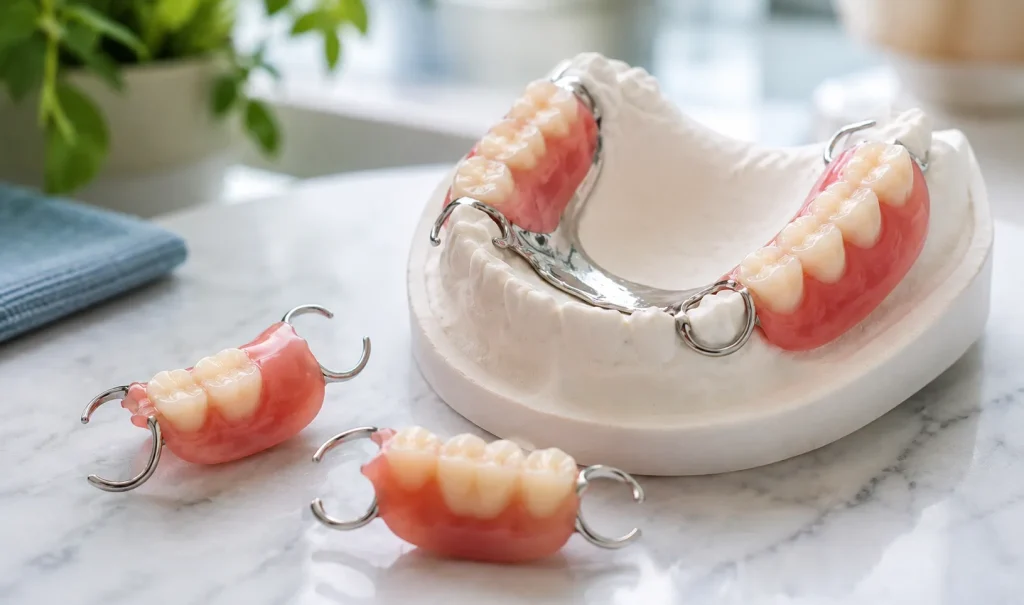
Table of Contents

- Understanding Partial Dentures for Back Teeth
- Why Back Teeth are Different to Front Teeth
- What are Partial Dentures for Back Teeth?
- Types of Partial Dentures for Back Teeth
- Acrylic Partial
- Flexible Partial
- Metal Partial Dentures
- How the Fitting Process Works
- Bite Force and Adjusting to Wearing Them
- Caring for Your Partial Denture
- Honest Drawbacks to Consider
- Alternatives to Partial Dentures
- How Much Do Partial Dentures for Back Teeth Cost?
- Is a Partial Denture Right for You?
- Conclusion
Losing one or more back teeth doesn’t necessarily mean a full denture is on the cards. For many patients, a partial denture designed specifically for the back of the mouth is a straightforward, cost-effective way to restore chewing function and protect the surrounding teeth from shifting out of place. This guide covers what partial dentures for back teeth actually are, the different materials available, what the fitting process involves, and how they compare to alternatives such as bridges and implants.
Why Back Teeth are Different to Front Teeth
Front teeth do most of the work when it comes to biting and appearance. Back teeth, the molars and premolars, do the heavy lifting when it comes to chewing. They carry the bulk of the force generated during eating, which means any replacement for a missing back tooth needs to prioritise strength and stability over aesthetics.
Leaving a gap where a back tooth used to be isn’t just a cosmetic issue. Over time, the teeth next to and opposite the gap can begin to drift or tilt, the bite can become uneven, and the remaining teeth end up carrying more pressure than they’re designed for. This is one of the main reasons dentists recommend replacing a missing back tooth sooner rather than later, even if it isn’t visible when you smile.
What are Partial Dentures for Back Teeth?
A partial denture is a removable appliance that replaces one or more missing teeth using a gum-coloured base and a supporting framework, held in place by the natural teeth still present in the mouth. Unlike a full denture, which replaces an entire arch of teeth, a partial denture only fills the specific gaps that are missing, in this case, at the back of the mouth.
Partial dentures for back teeth can be designed to replace a single molar, several teeth on one side, or teeth on both sides of the mouth, depending on what’s needed. Because they’re removable, they can be taken out for cleaning and at night, which some patients find easier to manage than a fixed alternative.
Types of Partial Dentures for Back Teeth
There are three main materials used for partial dentures, each with a different balance of strength, comfort and cost.
Acrylic Partial
Dentures are the most affordable option. The base is dyed to match the colour of the gums, making them reasonably discreet, and they can typically be adjusted or repaired if a tooth needs to be added later. On the downside, acrylic is bulkier than other materials and more prone to cracking under heavy chewing pressure, so it tends to work best as a shorter-term or transitional solution.
Flexible Partial
Often made from a nylon-based material, use a thin, flexible base rather than metal clasps to grip the surrounding teeth. They’re comfortable, lightweight and blend in well with the natural gum tissue. The trade-off is that if a flexible denture breaks, it generally can’t be repaired and needs to be replaced entirely.
Metal Partial Pentures
Usually made from a cobalt-chromium alloy, are the strongest and thinnest options available. Because metal frameworks distribute biting force more evenly, they tend to be the preferred choice specifically for back teeth, where chewing pressure is highest. They’re more durable and less bulky than acrylic, though they come at a higher price point and the metal clasps can occasionally be more visible.
Acrylic
- Strength: Moderate
- Comfort: Bulkier fit
- Durability: 5–8 years
- Cost: Lowest
- Best for: Budget or short-term solutions
Flexible
- Strength: Moderate
- Comfort: Very comfortable
- Durability: Good, not repairable
- Cost: Mid-range
- Best for: Patients prioritising comfort and appearance
Metal
- Strength: Highest
- Comfort: Thin, secure fit
- Durability: Most durable
- Cost: Highest
- Best for: Heavy chewing and long-term use
How the Fitting Process Works
Getting a partial denture fitted usually takes place over several appointments rather than in a single visit.
It starts with a consultation and assessment, where the dentist examines the gap, the health of the surrounding teeth and gums, and discusses which material would suit the patient’s needs. Impressions and precise measurements of the mouth are then taken, which are sent to a dental laboratory to build the denture.
Before the final version is made, most patients will have a try-in stage, where a wax or trial model is checked in the mouth for fit, bite and comfort, allowing for adjustments before the denture is finalised. Once everything looks right, the finished denture is fitted, with any final tweaks made to the framework or clasps. From consultation to final fitting, the process typically takes a few weeks, though timelines can vary between NHS and private dental care.
Bite Force and Adjusting to Wearing Them
It’s normal to need a short adjustment period after a new partial denture is fitted. Some soreness, extra saliva production, or minor changes to speech in the first few days or weeks are common and usually settle down as the mouth adapts.
Chewing efficiency tends to improve gradually as the muscles and remaining teeth get used to the new appliance. This is another area where material choice matters: because metal frameworks are thinner and distribute bite force more evenly across the remaining teeth, they generally offer a more stable, comfortable chewing experience for back teeth compared with bulkier acrylic options.
Honest Drawbacks to Consider
Partial dentures are a well-established solution, but they’re not without limitations, and it’s worth going in with realistic expectations.
Because a partial denture sits on top of the gum rather than replacing the tooth root, some bone loss in the jaw can occur in the area over time, a natural process that happens with any missing tooth, but one that isn’t addressed by a denture the way an implant would. Fit can also shift gradually as the mouth changes shape, which is part of why regular check-ups matter. Some patients experience minor gum irritation if the denture isn’t cleaned or maintained consistently, and like any dental appliance, a partial denture won’t last forever, most need replacing or relining after several years of use.
None of this makes a partial denture the wrong choice; for many people, it remains the most practical and affordable way to restore a missing back tooth. It simply helps to know what ongoing care and eventual replacement look like.
Alternatives to Partial Dentures
Depending on the situation, there are a couple of other options worth discussing with a dentist. A fixed dental bridge replaces the missing tooth using crowns fitted to the adjacent teeth, creating a non-removable restoration. It can feel more like a natural tooth day-to-day, though it does require the neighbouring teeth to be prepared and shaped to hold the crowns.
Dental implants replace the tooth root itself with a small titanium post, topped with a crown. This is generally the closest option to a natural tooth in both function and appearance, and it helps preserve the jawbone in a way removable dentures don’t. Implants typically involve a longer treatment timeline and a higher upfront cost, but they’re designed to last many years with proper care.
How Much Do Partial Dentures for Back Teeth Cost?
Costs vary depending on the material, the number of teeth being replaced, and whether treatment is carried out privately or through the NHS. As a general guide in the UK:
- NHS partial dentures typically fall under a standard treatment band, making them the most affordable route where eligible.
- Private acrylic dentures tend to sit at the lower end of the private pricing scale.
- Private flexible dentures are usually a step up in cost from acrylic.
- Private metal (cobalt-chromium) dentures are generally the most expensive option, reflecting the additional strength and durability they offer.
A dentist will be able to give an accurate quote based on individual circumstances, including how many teeth need replacing and the condition of the remaining teeth.
Is a Partial Denture Right for You?
A partial denture is often a good fit for patients who have healthy remaining teeth to support the appliance, want a removable and more affordable option, and are comfortable with a daily cleaning routine. It may be worth discussing alternatives with a dentist if long-term bone preservation is a priority, if a more permanent fixed solution is preferred, or if there are concerns about denture stability during heavy chewing.
Ultimately, the right choice depends on individual oral health, budget and personal preference, which is why a proper consultation is the best next step.
Conclusion
Missing a back tooth doesn’t have to mean complicated or costly treatment. Partial dentures offer a proven, flexible way to restore chewing function and protect the rest of the mouth from the knock-on effects of a gap, with material options to suit different needs and budgets. If you’re missing a back tooth and weighing up your options, book a consultation with your dentist to discuss which type of partial denture, or alternative, would work best for you.

Ethan Parker writes and reviews content on denture treatments and denture care, focusing on accuracy and clarity to make information easy to understand.
Other Relevant Posts

Learning to Talk With Dentures: Tips for Clearer Speech
You have your dentures fitted, you are getting used to wearing them, and now a very practical question starts…
How to Fix Broken Dentures: A Practical Guide
You have your dentures fitted, you are getting used to wearing them, and now a very practical question starts…

What Can I Eat With Dentures? Best Foods & What to Avoid
You have your dentures fitted, you are getting used to wearing them, and now a very practical question starts…