

Flexible Dentures: Advantages and Disadvantages Explained
Posted by Ethan Parker on
- September 14, 2026
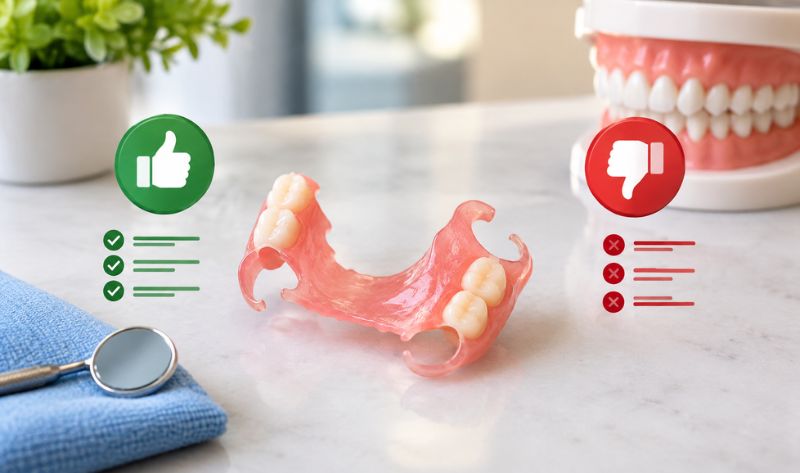
Table of Contents

- What are Flexible Dentures Made Of?
- How Flexible Dentures Differ from Traditional Dentures
- Types of Flexible Dentures
- Advantages of Flexible Dentures
- Disadvantages of Flexible Dentures
- How Much Do Flexible Partial Dentures Cost?
- How to Clean Flexible Dentures
- When a Professional Denture Assessment May Be Needed
- Prevention and Oral Health Advice
- Conclusion
Replacing missing teeth can make everyday activities such as eating, speaking and smiling feel more comfortable. If you are concerned about visible metal clasps or the bulk of a traditional denture, flexible dentures may be an option worth discussing.
Flexible dentures are removable appliances, usually used to replace some missing teeth while natural teeth remain. Their main appeal is a lightweight, discreet design. However, comfort and appearance are only part of the decision: support, maintenance and future changes to your mouth also matter.
What are Flexible Dentures Made Of?
Dentures need to be strong enough for everyday use while feeling comfortable in your mouth. Flexible dentures commonly use nylon-based thermoplastic resin, a lightweight material that can bend slightly without behaving like the rigid acrylic used in many traditional dentures.
Different parts of the denture have different functions:
- Flexible base: Supports the replacement teeth and sits against your gums.
- Retaining clasps: Fit around your remaining natural teeth to help hold the denture in place.
- Replacement teeth: Commonly made from firm resin to provide a surface for chewing.
The base and clasps can match the colour of your gums, making them less noticeable when you smile. Some materials are also slightly translucent, helping your natural gum colour to show through.
Although the base has some flexibility, the replacement teeth remain firm. This combination helps the denture offer flexibility where needed while providing a functional chewing surface.
How Flexible Dentures Differ from Traditional Dentures
Traditional partial dentures may have an acrylic base or a cobalt-chrome framework. Flexible partial dentures commonly use a nylon base with discreet clasps that fit around the remaining teeth.
Feature | Flexible partial dentures | Traditional partial dentures |
Base | Commonly flexible nylon resin | Rigid acrylic or a metal framework |
Clasps | Often gum-coloured | May include visible metal clasps |
Feel | Can feel thin and lightweight | Varies with material and design |
Support | Less rigid | Metal frameworks offer greater rigidity |
Modifications | Often require specialist techniques | Acrylic designs are generally easier to modify |
These differences affect more than appearance. Your dentist must consider how the denture will distribute chewing forces and whether it may need changes later.
Types of Flexible Dentures
Valplast, FlexiLytes and Sunflex are brands of partial dentures. Their materials and designs can differ, so ask your dentist whether the option offered is fully flexible or includes a metal framework.
Valplast
Valplast is a nylon-based flexible partial denture option. Its gum-coloured clasps provide a discreet alternative to visible metal, while its thin base may appeal to people who dislike bulky dentures.
It is primarily used for partial tooth replacement. Suitability depends on the condition and arrangement of your remaining teeth, gums and bite.
FlexiLytes
FlexiLytes is a branded partial denture option associated with Aspen Dental. You may also encounter FlexiLytes Combo, which combines resin and a metal framework for additional stability.
Because these names refer to different designs, do not assume every version is entirely metal-free. Ask your provider to confirm the construction, availability and maintenance requirements of the proposed appliance.
Sunflex
Sunflex uses a nylon thermoplastic resin and is available in metal-free partial denture designs. The material can also be combined with a cast metal framework when additional support is needed.
Its manufacturer notes that it is not ideal for new dentures fitted straight after tooth removal because soft liners and tissue conditioners do not adhere to the material. This matters when the mouth is still changing after extractions.
Advantages of Flexible Dentures
Flexible partial dentures can offer the following benefits:
- Natural Appearance: Gum-coloured clasps can hold the denture in place without visible metal clasps.
- Thin, Lightweight Design: The base can be thinner than conventional acrylic dentures, making it feel less bulky.
- Comfortable Fit: The flexible material may feel more comfortable for some patients, although proper fitting is still essential.
- Secure Retention: Flexible clasps fit around the natural contours of remaining teeth to help keep the denture in position.
- Resistance to Breakage: Nylon bases are less brittle than conventional acrylic and less likely to crack when dropped. However, the replacement teeth can still be damaged.
- Options for Certain Material Allergies: Some nylon dentures, including Valplast, contain no acrylic monomer or metal. They may suit people with sensitivities to these materials, but they are not guaranteed to prevent every allergic reaction.
Disadvantages of Flexible Dentures
Flexible partial dentures also have some limitations:
- Limited Suitability for Complete Tooth Replacement: They are mainly designed to replace some missing teeth. Replacing all teeth usually requires a more rigid denture, although specialist exceptions exist.
- More Complex Adjustments and Repairs: Relining, repairing or adding teeth may require specialist laboratory work. In some cases, replacing the denture is more appropriate.
- Less Rigid Support: Flexible bases may provide less stability during chewing than a metal framework, particularly in patients with heavy bites or significant bone loss.
- Changes in Fit Over Time: Flexibility does not compensate for every change in the gums and jaw. Regular reviews remain necessary, and replacement may eventually be needed.
- Specific Cleaning Requirements: They need daily cleaning with products suitable for their material. Incorrect cleaners or abrasive toothpaste can affect their surface and appearance.
- Possible Staining and Colour Changes: Some nylon materials can become discoloured. Laboratory research has found colour changes after exposure to coffee and red wine, so stain resistance should not be assumed.
How Much Do Flexible Partial Dentures Cost?
Prices vary between practices and depend on the number of teeth being replaced, the material, laboratory work and treatment complexity.
As an illustrative guide, one UK clinic publishes a range of approximately £400–£900 per arch for flexible partial dentures. An arch means the upper or lower jaw. This is a provider’s indicative range, not a guaranteed UK-wide price, and your quotation may fall outside it.
Ask for a clear cost breakdown that shows whether check-ups, any treatment needed beforehand, adjustments and follow-up visits are included. Before choosing your denture, also check how much future repairs or replacement might cost.
How to Clean Flexible Dentures
Follow the instructions supplied for your particular denture. A cleaning method suitable for one material may not suit another.
- Rinse After Meals: Remove loose food with running water.
- Use an Approved Cleaning Method: Choose the cleanser and brush recommended for your appliance.
- Avoid Ordinary Toothpaste on the Denture: It can scratch or dull the surface.
- Follow the Soaking Instructions. Use the correct solution, concentration and contact time.
- Store it as Directed: For Valplast, the manufacturer recommends keeping the appliance in plain water or its approved cleaning solution when it is out of the mouth.
Valplast specifically advises against ordinary toothbrushes and recommends a purpose-designed denture brush. Its published instructions include a daily 10–15-minute soak in Val-Clean. Avoid boiling or very hot water during routine cleaning, as heat can distort the appliance.
When a Professional Denture Assessment May Be Needed
Book a denture consultation at the denture clinic if your denture slips, clicks, causes discomfort or becomes damaged. Red or bleeding gums and persistent bad breath should also be checked, as these symptoms may indicate issues with denture fit, hygiene or your underlying oral health.
Avoid reshaping or repairing your denture yourself. Contact your denture clinic so the cause can be assessed and the necessary adjustments or repairs can be carried out safely.
Prevention and Oral Health Advice
Looking after your remaining teeth is just as important as cleaning the denture. Brush twice daily with fluoride toothpaste and clean between teeth using floss or appropriately sized interdental brushes.
Limit frequent sugary snacks and drinks, avoid smoking, and attend denture appointments at the intervals recommended for you. These habits help protect the teeth and gums that support your partial denture.
Remove your dentures overnight unless your dentist advises otherwise. Continue regular reviews even when the appliance feels comfortable, because the shape of your gums and jaw can change over time.
Conclusion
Flexible dentures can offer a discreet, lightweight way to replace missing teeth. Their potential advantages need to be weighed against more complex maintenance and limits on structural support.
Before deciding, ask your dentist why the proposed design suits your mouth, how to care for it and what happens if your dental needs change. A clear treatment plan will help you judge both its immediate benefits and its longer-term practicality.

Ethan Parker writes and reviews content on denture treatments and denture care, focusing on accuracy and clarity to make information easy to understand.
Other Relevant Posts

Learning to Talk With Dentures: Tips for Clearer Speech
You have your dentures fitted, you are getting used to wearing them, and now a very practical question starts…
How to Fix Broken Dentures: A Practical Guide
You have your dentures fitted, you are getting used to wearing them, and now a very practical question starts…

What Can I Eat With Dentures? Best Foods & What to Avoid
You have your dentures fitted, you are getting used to wearing them, and now a very practical question starts…