

Full Dentures vs Partial Dentures: Which Option Suits You Best?
Posted by Ethan Parker on
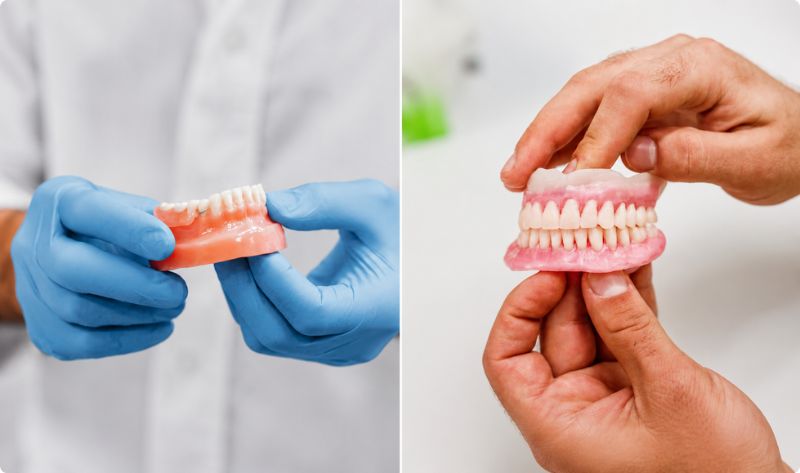
Table of Contents

- What are Full Dentures?
- What are Partial Dentures?
- Full Dentures vs Partial Dentures
- Full Dentures Recommended When
- Partial Dentures Recommended When
- How Do You Know Which Option is Right for You?
- Making the Right Choice With H & A Dental
- Final Thoughts
Losing teeth, whether it’s one, a few, or all of them, is one of those experiences that touches far more than just your mouth. It affects the way you eat, the way you speak, and often the way you feel about yourself. The moment your dentist mentions dentures, it’s natural to feel a little anxious about what comes next. There’s a lot of information out there, and not all of it is easy to make sense of.
One of the first questions most people ask is a simple one, do I need full dentures or partial dentures? It sounds straightforward, but the answer depends on more than just how many teeth you’ve lost. Your gum health, your jawbone structure, your lifestyle, and your personal preferences all play a role in finding the right fit, quite literally.
What are Full Dentures?
Full dentures, also known as complete dentures, replace an entire arch of teeth. That means either all of your upper teeth, all of your lower teeth, or both. They sit directly on the gum and are held in place through natural suction, the shape of your mouth, and sometimes a small amount of denture adhesive.
Most people associate dentures with older generations, but the reality is that complete tooth loss can happen at any age, as a result of advanced gum disease, decay, trauma, or a combination of factors. Full dentures are a well-established, time-tested solution that can restore both function and appearance smoothly when fitted and looked after properly.
There are two main types of full dentures worth knowing about:
Conventional full dentures
These are made and fitted after your remaining teeth have been removed and your gums have fully healed. This healing process typically takes several weeks, during which time you’ll be without teeth. The wait can feel daunting, but it allows your gums to settle into their final shape, which means a more accurate, comfortable fit.
Immediate dentures
They are fitted on the same day your teeth are removed, so you’re never left without a smile. The trade-off is that because they’re made before your gums have healed and reshaped, they’ll almost certainly need adjusting or relining as your mouth settles, usually within the first few months.
What are Partial Dentures?
Partial dentures are designed for people who still have some of their natural teeth remaining. Rather than replacing an entire arch, they fill in the gaps left by missing teeth, restoring your smile, improving your bite, and preventing the remaining natural teeth from shifting out of position over time.
This last point is worth paying attention to. When a gap is left unfilled, the teeth on either side of it gradually begin to drift into the empty space. This can change your bite, create new pressure points, and make any future dental work more complicated. A partial denture addresses the missing teeth while protecting the ones that remain.
Partial dentures come in a couple of different forms:
Acrylic partial dentures
These are made from a gum-coloured plastic base with replacement teeth attached. They tend to be more affordable and are often used as a shorter-term solution or while waiting for a more permanent option. They clip onto existing teeth using small metal clasps, which hold them in place during the day.
Chrome cobalt partial dentures
They are considered the gold standard for removable partial dentures. They use a thin, lightweight metal framework that clips securely onto natural teeth, with the replacement teeth attached to the frame. They’re slimmer, more comfortable, more durable, and tend to feel far more natural in the mouth than their acrylic counterparts. For most patients who need a long-term partial solution, chrome dentures are worth the additional investment.
Full Dentures Recommended When
Understanding the practical differences between the two options can help you have a much more informed conversation with your dentist.
How Many Teeth Do You Have Left?
This is often the deciding factor. If you’ve lost all, or nearly all, of your teeth on one or both arches, full dentures are the logical route. If you still have a reasonable number of healthy natural teeth remaining, partial dentures are almost always the preferred option, as they preserve what’s already there.
Stability and Fit
Full dentures rely entirely on suction and the shape of your gum ridge to stay in place. This is why lower full dentures, in particular, can feel less stable, there’s simply less surface area for them to grip. Partial dentures, by contrast, have the added advantage of clipping onto natural teeth, which gives them a much more secure anchor and generally makes them feel more stable during eating and speaking.
Appearance and Confidence
Both full and partial dentures, when well made and properly fitted, can look entirely natural. Modern denture technology has come a long way, and a skilled dental team can create a result that’s virtually indistinguishable from natural teeth. Partial dentures have a slight edge in that they work alongside your existing teeth, meaning your smile looks just as it should , full, natural, and entirely yours.
Cost
In the UK, partial dentures are generally less expensive than full dentures, simply because less material and laboratory work is involved. Chrome cobalt partial dentures cost more than acrylic ones but tend to last longer and feel more comfortable, making them better value over time. Full dentures represent a larger upfront investment, particularly if immediate dentures are chosen and relining or replacement is needed within the first year.
Full Dentures Recommended When
Full dentures are typically recommended when:
- All teeth on one or both arches have been lost or need to be removed
- The remaining teeth are too damaged, decayed, or periodontally compromised to save
- The patient’s gum health and bone density are sufficient to support a stable denture
- The patient is looking for a non-surgical, removable tooth replacement option
Partial Dentures Recommended When
Partial dentures are usually the right choice when:
- Some healthy natural teeth remain and are worth preserving
- One or more teeth are missing and causing functional or aesthetic concerns
- The patient wants a removable, non-surgical solution to fill gaps
- Budget is a consideration and implants aren’t currently option
How Do You Know Which Option is Right for You?
You don’t have to figure this out on your own, the right dental team will walk alongside you and guide you through every step of the decision.
- A thorough assessment takes everything into account , your remaining teeth, the condition of your gums and jawbone, your day-to-day lifestyle, your budget, and what you truly want from your smile.
- What matters most is that you feel good about your decision, not hurried, not pressured, and never left wondering whether you made the right call.
- A good dental team won’t simply hand you a list of options and leave you to it, they’ll sit with you, explain things clearly, and make sure you understand exactly what each path looks like before you decide.
- The goal is simple, to help you move forward with confidence, knowing that the choice you’ve made is the right one for you and nobody else.
Making the Right Choice With H & A Dental
At H & A Dental, we know that exploring your tooth replacement options can feel like a lot to get your head around, and that’s completely okay. Our experienced team is here to make things clearer, guiding you through the process in a way that feels calm, simple, and entirely at your own pace.
We listen to what matters to you, assess your oral health properly, and explain every option in plain, honest language. No pressure. No confusing terminology. Just straightforward advice and genuine care from a team that truly has your best interests at heart.
Whether full dentures, partial dentures, or a denture repair solution turns out to be the right path, H & A Dental is here to make sure the result looks natural, feels comfortable, and gives you back far more than just your teeth. The confidence to eat what you enjoy, speak without a second thought, and smile freely, every single day.
Final Thoughts
Full dentures and partial dentures each have their place, and neither option is inherently better than the other. The right choice depends entirely on your individual circumstances, how many teeth you have left, the condition of your gums and bone, your lifestyle, and what matters most to you in a tooth replacement solution.
Don’t wait until things get worse. Getting advice early means more options, simpler solutions, and a much better chance of an outcome you’ll be genuinely pleased with.

Ethan Parker writes and reviews content on denture treatments and denture care, focusing on accuracy and clarity to make information easy to understand.
Other Relevant Posts

Learning to Talk With Dentures: Tips for Clearer Speech
You have your dentures fitted, you are getting used to wearing them, and now a very practical question starts…
How to Fix Broken Dentures: A Practical Guide
You have your dentures fitted, you are getting used to wearing them, and now a very practical question starts…

What Can I Eat With Dentures? Best Foods & What to Avoid
You have your dentures fitted, you are getting used to wearing them, and now a very practical question starts…