

What Can I Eat With Dentures? Best Foods & What to Avoid
Posted by Ethan Parker on
- September 22, 2026
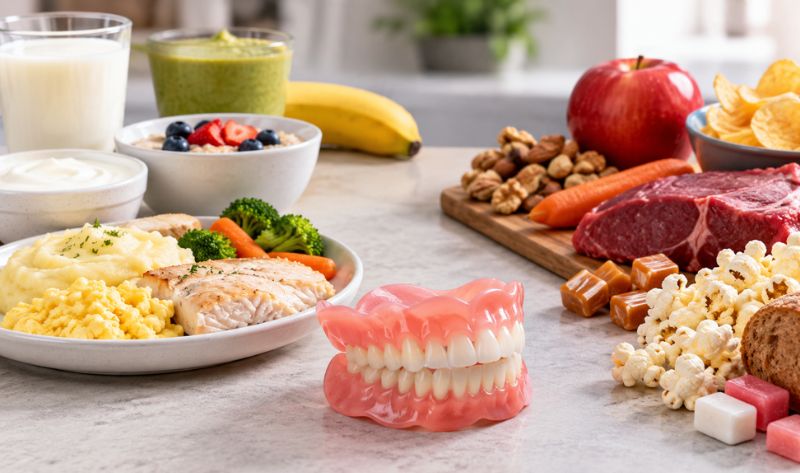
Table of Contents

- Why Chewing Feels Different With Dentures
- Best Foods to Eat With New Dentures
- Foods to Avoid or Modify While You Adjust
- Tips for Eating More Comfortably With Dentures
- Eating With Dentures After Six Weeks
- When to Ask Your Denture Clinic for Advice
- Conclusion
Getting used to new dentures involves a few adjustments, especially at mealtimes. Your usual breakfast or favourite Sunday roast may feel different as your mouth learns to bite and chew with them. If you’re wondering what you can eat with new dentures, there are plenty of familiar foods to start with.
Softer meals can make those first few weeks easier while you build confidence. In this guide, we’ll cover the best foods to try, which ones to leave for later, and simple ways to make eating more comfortable.
Why Chewing Feels Different With Dentures
Dentures sit on your gums and can move slightly when you chew. Lower dentures may move more because they have less support than upper dentures. Biting into food with your front teeth or chewing too hard on one side can make them slip and cause discomfort.
Your cheeks, lips and tongue need time to learn how to keep your dentures steady. Eating usually becomes easier as your mouth adjusts over the first few weeks. If your dentures keep slipping or feel sore, ask your denturist to check the fit.
Best Foods to Eat With New Dentures
Start with foods that need little chewing, then introduce more texture as you feel comfortable. This gradual approach is recommended by Guy’s and St Thomas’ NHS Foundation Trust. The following meal ideas put that advice into practice.
1. Soft, Cooked Vegetables and Mashed Potatoes
Vegetables are often easier to manage when steamed, boiled or stewed until tender. Carrots, cauliflower, squash and courgettes can all be cooked until they break apart easily with a fork. Mashed potatoes and sweet potatoes are useful bases for meals. Serve them with soft fish, scrambled eggs or finely minced meat in gravy to add variety.
Remove tough skins and avoid leaving a crisp crust on roasted vegetables during the early stages. If a vegetable still takes considerable effort to chew, cook it longer or mash it.
2. Yoghurt, Smoothies and Soft Fruits
Smooth yoghurt is a straightforward breakfast or snack when chewing feels uncomfortable. Choose varieties without granola, whole nuts or hard fruit pieces. For fruit, try mashed banana, stewed apple or soft tinned pears and peaches. Remove skins, stones and any firm pieces. A simple smoothie made with milk or yoghurt and banana offers another option.
Keep it smooth, without added seeds or crunchy toppings. Use smoothies alongside meals to keep your diet varied, rather than relying on drinks for every meal.
3. Eggs, Flaky Fish and Other Soft Proteins
Soft food does not have to mean eating only soup and pudding. There are plenty of ways to include protein without tackling a tough piece of meat. Scrambled eggs, a soft omelette, tofu and well-cooked lentils are practical choices.
Poached or steamed cod and haddock can work well too; check carefully for bones and serve with a sauce if the fish feels dry. As chewing becomes more comfortable, try finely minced beef or turkey in gravy. A cottage pie with a soft potato topping is one familiar option. Avoid letting the top become hard or heavily browned.
4. Soups and Stews With Tender Ingredients
Blended vegetable soup is useful when you want a meal with very little chewing. Lentils, beans or other suitable ingredients can add substance and variety. For stews, check the texture of each ingredient. A dish may contain plenty of liquid while still having tough meat or firm vegetables.
Cook everything until tender, then cut up or mash larger pieces. Let hot meals cool to a comfortable temperature before eating. Leave crusty bread and croutons aside while you are getting used to your dentures.
5. Well-Cooked Pasta, Rice and Porridge
Porridge made to a smooth, comfortable consistency is an easy breakfast to adapt. Mashed bananas can add flavour without introducing a crunchy texture. For lunch or dinner, try small pasta shapes cooked until soft and served with sauce. Avoid chewy pasta or baked dishes with a hard topping initially.
Rice may suit some people once they feel more confident, particularly when cooked until soft and moist. However, individual grains can be awkward to manage or collect around dentures. If this happens, try mashed potato or softer pasta instead.
Foods to Avoid or Modify While You Adjust
You do not necessarily need to give up every challenging food permanently. Preparation, portion size and denture fit all matter. However, very hard and sticky foods are sensible to avoid at first, as advised by the Oral Health Foundation.
1. Hard or Crunchy Foods
Whole nuts, hard sweets, popcorn, raw carrots and very crusty bread can be difficult to eat with new dentures. Choose cooked vegetables instead of raw sticks and soft fruit instead of biting into firm pieces. Leave crunchy toppings out of meals until you know what you can manage comfortably. Avoid using hard food to test how strong your new bite is. Build confidence with easier textures first.
2. Sticky or Chewy Foods
Toffee, caramel, chewy sweets and chewing gum can cling to dentures and make eating awkward. The ADA specifically advises avoiding extremely sticky foods and considering a break from chewing gum during adjustment. Even soft-looking food can be sticky. Pay attention to how it behaves in your mouth, rather than judging it only by its appearance.
3. Tough Meats
Steak, chewy bacon and dry roast meat can require considerable chewing. Start with fish, eggs or tender minced meat instead. When you reintroduce meat, choose tender pieces, cut them small and add gravy or sauce. Slow cooking can help, but check that the finished meat breaks apart easily. If eating it feels like hard work, choose another protein and return to that texture later.
4. Seeds and Small Particles
Sesame seeds, popcorn fragments and other small particles may collect beneath or around dentures and cause irritation. Try smooth yoghurt rather than seeded varieties, and leave loose seeds off meals initially. If something becomes trapped, stop eating and clean your dentures rather than continuing to chew over the discomfort.
5. Corn on the Cob
Corn on the cob, whole apples and large crusty rolls require you to bite through food with your front teeth. This may be awkward with removable dentures. Changing the serving method can help. Cut corn off the cob and try a small amount if you can manage the kernels comfortably. Stew apples or cut suitable fruit into small pieces. Cut sandwiches into manageable portions instead of taking a large bite.
Tips for Eating More Comfortably With Dentures
Small changes to your eating habits can make meals easier.
- Take Smaller Mouthfuls and Chew Slowly: Cut food before you begin eating, so you can concentrate on chewing comfortably.
- Use Both Sides of your Mouth:Sharing the chewing pressure between both sides can help keep dentures balanced. This is part of the Oral Health Foundation’s advice for eating with dentures.
- Keep Meals Moist: Gravy, sauces and suitable dressings can make dry food easier to manage. Add a little at a time until the texture suits you.
- Introduce One More Demanding Texture at a Time: For example, move from mashed vegetables to soft pieces before attempting raw vegetables. This makes it easier to identify what still feels difficult.
- Clean your Dentures After Meals: Once permitted by any extraction aftercare instructions, remove and rinse them to clear food debris. The NHS recommends rinsing dentures in cold water after eating.
Eating With Dentures After Six Weeks
After six weeks, you may find it easier to chew different foods and feel more confident at mealtimes. However, everyone adjusts at their own pace. You may still prefer softer foods or need your denturist to adjust the fit. The NHS says getting used to dentures can take a few weeks, but there is no fixed six-week deadline.
If your dentures are fitted straight after teeth are removed, your gums can change shape as they heal. This may affect the fit, so your dentures might need adjusting or replacing.
Look at how comfortable eating feels. Being able to chew more foods, keep your dentures steady and finish meals more easily are signs of progress. If pain continues, see your denturist rather than waiting for your mouth to adjust.
When to Ask Your Denture Clinic for Advice
Contact your denture clinic if your dentures keep slipping, hurt, are damaged or no longer fit well. Your denturist should also check red or bleeding gums. If eating is difficult enough that you skip meals or lose weight without trying, tell your denturist . Your GP or a dietitian can also help you get the nutrition you need. Do not try to file, bend or repair your dentures yourself. Let your denturist check the fit and make any adjustments.
Conclusion
Eating with new dentures takes practice. Start with soft, moist foods, take small bites and try more textures as you feel comfortable. There is no fixed timeline, so focus on steady progress rather than rushing back to every favourite food.
If pain or slipping dentures make meals difficult, contact your denture clinic for a fit check. A comfortable fit can help you enjoy a wider range of foods and feel more confident at mealtimes.

Ethan Parker writes and reviews content on denture treatments and denture care, focusing on accuracy and clarity to make information easy to understand.
Other Relevant Posts
How to Fix Broken Dentures: A Practical Guide
You have your dentures fitted, you are getting used to wearing them, and now a very practical question starts…
Flexible Dentures: Advantages and Disadvantages Explained
You have your dentures fitted, you are getting used to wearing them, and now a very practical question starts…
What is the Fastest Way to Heal Denture Sores?
You have your dentures fitted, you are getting used to wearing them, and now a very practical question starts…