

How to Fix Broken Dentures: A Practical Guide
Posted by Ethan Parker on
- October 5, 2026
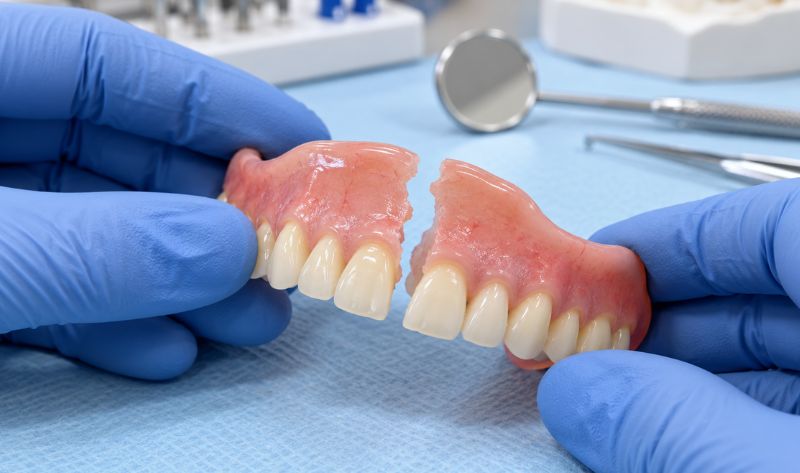
Table of Contents

- What to Do Immediately
- When Your Dentures Break
- Can You Fix Broken Dentures at Home?
- How Do Professionals Fix Broken Dentures?
- Should You Repair or Replace Your Denture?
- How Long Does Denture Repair Take?
How Much Does Broken - Denture Repair Cost
- Conclusion
A broken denture can interrupt your day without warning. It might slip from your hands while cleaning, crack during a meal, or lose a tooth just before you need to leave the house. Your first concern is likely to be how quickly you can get it repaired and whether you will need a replacement.
If you are wondering how to fix broken dentures, start by removing the damaged denture, keeping the broken pieces, and contacting your denturist. Avoid household glue or attempts to force the parts together. NHS guidance recommends taking any broken parts to your appointment so the denturist can assess whether repair is possible.
The right repair depends on what has broken and whether the denture still fits properly. This guide explains your next steps, the repair options a professional may recommend, and what to expect while arranging treatment.
What to Do Immediately When Your Dentures Break
Before trying to fix anything, protect your mouth and keep the damaged denture safe.
Remove the Damaged Denture
Stop eating and carefully remove the denture. Continuing to wear it may cause cuts, soreness, or further damage, even if it appears to stay in place. Do not test its strength by biting down. Keep the broken denture out of your mouth until a dental professional can assess it.
Keep All the Broken Pieces
Place the denture, loose teeth, and fragments in a clean, secure container. Bring everything to your appointment rather than throwing away small pieces. Your denturist needs to see the damage before deciding on the next step.
Avoid repeatedly fitting the sections together. Your task at this stage is to preserve them, not to work out how to bond them.
Contact Your Denture Clinic
Explain what happened and which part has broken. Mention any pain, sharp edges, or difficulty eating. If you rely heavily on your denture,let the dental practice know when you contact them to book an appointment or arrange a repair.
Contact the denture clinic before attempting a home repair. This gives you an opportunity to ask whether the damage needs an examination and what to do while waiting.
Can You Fix Broken Dentures at Home?
It is understandable to want an immediate solution, particularly when your denturist is closed. However, a denture must fit accurately against your gums and work correctly when you bite. Joining the pieces does not necessarily restore that fit.
Are Denture Repair Kits Suitable?
Some kits are sold as short-term emergency products. They have specific restrictions, and they are not suitable for every denture material or type of damage.
Some denture repair kits are intended only for temporary emergency use. They may not be suitable if pieces are missing, the broken parts cannot be aligned correctly, or the denture is made from flexible or 3D-printed materials. Check the product instructions carefully, as restrictions vary between kits.
DIY repairs can damage a denture beyond repair. Contact your denturist before using a kit to check whether it is suitable for your denture.
Can Denture Adhesive Repair a Crack?
Denture adhesive helps hold a denture in position. It is different from the material used to repair a fracture. Applying extra adhesive does not restore the broken structure.
Adhesive does not correct a poor fit. A loose denture may need professional adjustment, relining, or replacement.
Why Should You Avoid Superglue?
Household glue is not intended for denture repair. Apart from concerns about its suitability for use in the mouth, inaccurate bonding can change the fit and make professional repair more difficult.
Even a small alignment error matters. An improvised glue repair may turn a straightforward repair into a more complicated problem.
How Do Professionals Fix Broken Dentures?
Professional denture repair starts with identifying the damage and deciding whether the existing appliance is worth restoring. Different problems require different approaches.
Damage | Possible professional approach |
Crack or fracture in the acrylic base | Repair the damaged section or rejoin suitable pieces |
Detached denture tooth | Reattach a suitable tooth or fit a replacement |
Damaged clasp or attachment | Assess whether adjustment, repair, or replacement is appropriate |
Poor fit alongside damage | Consider repair together with fit correction |
Extensive deterioration | Assess whether a new denture would be more suitable |
These are possible repair options. A denture professional must assess your denture before confirming which option is suitable.
Repairing a Cracked or Broken Base
An acrylic denture may be repaired by rejoining the broken sections with dental-grade material. The pieces must be aligned accurately to preserve the denture’s shape and fit.
A clean break may be repairable if the pieces are available, but this depends on their condition and the extent of the damage.
Reattaching or Replacing a Denture Tooth
If a tooth comes away while the base remains usable, a professional may be able to reattach it or fit a replacement. Replacement denture teeth can be selected to match the existing teeth.
Relining and rebasing address different issues. A reline adds material to the fitting surface to improve its contact with the gums. Rebasing replaces the base while retaining suitable existing teeth. These may be considered when repairing the break alone would not address the wider problem.
Assessing Damaged Clasps on Partial Dentures
Partial dentures may use a metal framework and clasps to connect to remaining teeth. Their attachments need professional assessment if they become damaged.
Avoid bending a clasp yourself or forcing the denture into place by biting down. ADA guidance explains that this can bend or break the clasps.
Checking the Fit After Repair
The process should include checking how the repaired denture fits and functions. A repair that looks neat may still need adjustment to help prevent chewing problems and sore spots.
Tell your denturist about any rocking, rubbing, or uneven bite you noticed before the break. This helps them assess whether a poor fit contributed to the damage.
Should You Repair or Replace Your Denture?
Repair is one option, but it is not always the most useful long-term choice. The decision should consider the whole appliance.
A denture needs assessment for possible replacement when it has become unstable, fits poorly, causes persistent irritation, or has significantly deteriorated teeth or other components. The ADA identifies these as reasons for a professional replacement evaluation rather than an automatic instruction to replace every damaged denture.
Ask your denturist two questions, Can this denture be repaired? Will repairing it leave me with a comfortable, useful denture?
If you have paid for several repairs already, ask about the likely value of another repair compared with replacement. Understanding both options can help you choose without focusing only on the initial price.
How Long Does Denture Repair Take?
Some straightforward repairs may be completed on the same day. More complicated work may require a dental laboratory and additional time, so same-day repair is not guaranteed. When contacting the provider, ask:
- Does the denture need an examination first?
- When can it be assessed?
- Will it be sent to a laboratory?
- When should you expect it back?
- Will a fitting appointment be needed afterwards?
Confirm the full turnaround time before making plans. The appointment date and the collection date may be different.
How Much Does Broken Denture Repair Cost?
There is no single price that applies to every case. Denture treatment fees vary with the complexity of the work, the time required, and the location of the practice. An assessment is the best way to establish the cost of the treatment you need.
Ask for a clear quote explaining what is included. Useful questions include whether the price covers assessment, laboratory work, and any adjustment after the repair.
If repair and replacement are both options, request separate estimates. This lets you compare the proposed work rather than assuming that two differently priced services provide the same result.
How to Prevent Dentures From Breaking Again
Careful handling and regular reviews help you look after your denture after repair.
Clean Over a Protected Surface
Hold the denture over a folded towel or a sink filled with water. This reduces the chance of breakage if it slips from your hands.
Use Suitable Cleaning Products
Clean gently with a soft brush and a product recommended for your denture. Avoid ordinary toothpaste and abrasive household cleaners, which can scratch the material.
Avoid Hot Water
Do not use hot or boiling water to reshape or clean your denture. Heat can warp it.
Follow Storage Instructions
Follow your denturist’s guidance on keeping the denture moist when it is out of your mouth. Attend regular reviews and arrange an appointment if it becomes uncomfortable or loose. Cleveland Clinic recommends these handling, cleaning, storage, and review measures.
Watch for changes between appointments. Clicking, slipping, pain, or visible damage are reasons to have your denture checked. They do not all mean a fracture is developing, but they should not be ignored.
Conclusion
A broken denture does not always need replacing, but it should be checked by a dental professional. Remove it, keep all the broken pieces, and avoid household glue or improvised repairs. The right treatment will depend on the damage and how well the denture fits.
Contact your dentist to discuss repair options, costs, and timing. After repair, careful handling, suitable cleaning, and regular fit checks can help reduce the risk of another break.

Ethan Parker writes and reviews content on denture treatments and denture care, focusing on accuracy and clarity to make information easy to understand.
Other Relevant Posts
Invisible Dentures: Types, Benefits and What to Expect
You have your dentures fitted, you are getting used to wearing them, and now a very practical question starts…

Learning to Talk With Dentures: Tips for Clearer Speech
You have your dentures fitted, you are getting used to wearing them, and now a very practical question starts…

What Can I Eat With Dentures? Best Foods & What to Avoid
You have your dentures fitted, you are getting used to wearing them, and now a very practical question starts…