

What Type of Dentures Look Most Natural?
Posted by Ethan Parker on
- July 15, 2026
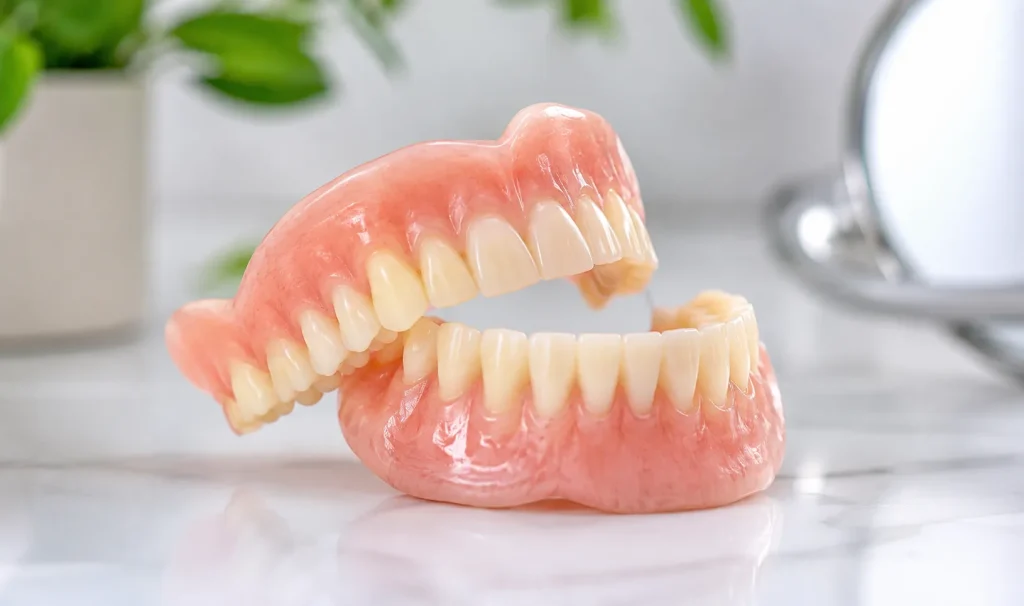
Table of Contents

- What Type of Dentures Look Most Natural?
- What Makes Dentures Look Natural?
- Material Quality
- The Gum Tissue Detail Most People Overlook
- Tooth Shape, Texture and Placement
- Customisation to the Individual Face
- Modern Fabrication Technology
- Types of Dentures and How Natural Each Can Look
- Implant-Supported Dentures
- Comfort and Natural Appearance Go Hand in Hand
- Caring for Your Dentures to Keep Them Looking Natural
- Choosing the Right Denture Team
- Conclusion
One of the biggest worries for anyone considering dentures isn’t comfort or cost, it’s whether people will be able to tell. The good news is that dentures have moved on a long way from the bulky, obviously artificial designs many people picture. Modern materials, careful customisation and skilled fitting mean today’s dentures can look remarkably close to natural teeth. This guide explains exactly what makes a denture look natural, which materials and types perform best, and what to look for when choosing your own.
What Actually Makes Dentures Look Natural
A natural-looking denture comes down to three things working together: the quality of the material used, how well the denture is customised to the individual, and the skill of the dental team and laboratory making it. Get all three right, and the result can be genuinely difficult to distinguish from real teeth. Get one wrong, say, a stock mould with no shade matching, and even good materials can end up looking flat and artificial.
Material Quality
The material a denture is made from has a big impact on how convincing it looks.
- Acrylic is the most common denture material. It’s colour-matched to the gums and can be shaped fairly freely, but cheaper acrylic work can look flat or overly uniform under bright light if it isn’t finished with care.
- Flexible dentures, made from a thin nylon-based material, sit closer to the gum line with no visible metal clasps, giving a more discreet, natural edge where the denture meets the gum.
- Porcelain and high-grade ceramic teeth tend to give the most convincing result overall, because they mimic the way light passes through natural enamel, a quality plain acrylic struggles to replicate.
- Cobalt-chromium, used for the framework in some partial dentures, is strong and thin, but the metal clasps that hold it in place can occasionally be visible depending on where the missing teeth are.
Material Comparison
Acrylic
- Natural appearance: Good with quality finishing
- Comfort: Bulkier fit
- Durability: 5–8 years
- Cost: Lowest
- Best for: Budget-friendly, full replacements
Flexible
- Natural appearance: Very good, discreet edges
- Comfort: Very comfortable
- Durability: Good, not repairable
- Cost: Mid-range
- Best for: Visible areas, comfort-focused patients
Porcelain/ceramic
- Natural appearance: Best light translucency
- Comfort: Varies by design
- Durability: Long-lasting
- Cost: Higher
- Best for: Patients prioritising realistic appearance
Cobalt-chromium
- Natural appearance: Strong, but clasps can show
- Comfort: Thin, secure fit
- Durability: Most durable
- Cost: Highest
- Best for: Heavy chewing and long-term partials
The Gum Tissue Detail Most People Overlook
It’s easy to focus entirely on the teeth themselves, but the gum-coloured base is just as important to a natural result. Skilled labs match the exact shade and pigmentation of a patient’s own gums rather than using a generic pink, and some go a step further by layering the acrylic to replicate the subtle depth and texture of real tissue, including faint variations that mimic the look of blood vessels beneath the surface. This is often where lower-quality dentures give themselves away, not in the teeth, but in a gum line that looks too smooth, too pale, or too uniform.
Tooth Shape, Texture and Placement
A denture built from a generic, stock mould will rarely look convincing, no matter how good the material is. Proper customisation means matching tooth shade to the patient’s skin tone and age (older patients, for instance, often have slightly less bright, more naturally worn-looking teeth), and choosing tooth size and shape to suit their facial structure rather than a one-size-fits-all template. Lip support is another often-overlooked factor: dentures that don’t provide adequate support behind the lips and cheeks can lead to a sunken, aged appearance, even if the teeth themselves look fine in isolation.
Modern Fabrication Technology
The way dentures are designed and made has changed significantly. Many practices now use digital scanning instead of traditional putty impressions, which improves both comfort during the process and accuracy of the final fit. Combined with CAD/CAM design and, increasingly, 3D printing, this technology allows for far more precise customisation of shape, shade and fit than older manual methods, translating directly into a more natural-looking and better-fitting final result.
Types of Dentures and How Natural Each Can Look
- Full dentures replace an entire arch of teeth and, with good shade matching and customisation, can look very natural, though they rely entirely on suction and fit for stability, which can affect confidence in some situations.
- Partial dentures replace one or more missing teeth using the surrounding natural teeth for support. When well matched in colour and shape to the existing teeth, they blend in convincingly, particularly with flexible or ceramic options.
- Implant-supported dentures are generally considered the most natural option overall. Because they’re anchored to implants rather than resting on the gum, they don’t shift or move the way a conventional denture might, and they help preserve the jawbone, avoiding the sunken facial appearance that can develop over time with bone loss under a traditional denture.
Comfort and Natural Appearance Go Hand in Hand
A denture that doesn’t fit well rarely looks natural either, poor fit can affect how the lips and cheeks sit, how evenly the bite aligns, and how securely the denture stays in place when talking or eating. Some soreness and a settling-in period are normal after a new denture is fitted, and minor adjustments in the following weeks are a normal part of getting both the comfort and the appearance right.
Caring for Your Dentures to Keep Them Looking Natural
Keeping a denture looking natural over time comes down to consistent care. A daily routine should include cleaning with a non-abrasive denture cleaner (regular toothpaste can be too harsh and cause scratching), along with soaking overnight in an appropriate solution to keep the material from drying out or warping. Being mindful of heavily staining foods and drinks, tea, coffee and red wine among the common culprits, helps preserve the shade over time, and regular dental check-ups allow for relining or adjustments as the mouth naturally changes shape.
Choosing the Right Denture Team
Since customisation and craftsmanship play such a large role in the final result, the dentist and lab you choose matter as much as the material itself. It’s worth asking about a practice’s experience with denture work specifically, checking whether they offer a proper try-in stage before the denture is finalised (rather than going straight to a final fit), and finding out whether adjustments can be made in-house or require a longer lab turnaround. At H and A Denture Clinic, every denture goes through an in-house try-in stage before final fitting, with adjustments handled directly by the team rather than sent off to an external lab helping keep both the fit and the finish as close to natural as possible.
Conclusion
The most natural-looking dentures aren’t defined by one single material or type, but by the combination of quality materials, thoughtful customisation, and a skilled dental team who take the time to get the details right. If a natural appearance is a priority, it’s worth discussing material options, customisation and the fitting process in detail during your consultation, so your dentures are built around your face, not a generic mould.

Ethan Parker writes and reviews content on denture treatments and denture care, focusing on accuracy and clarity to make information easy to understand.
Other Relevant Posts

Learning to Talk With Dentures: Tips for Clearer Speech
You have your dentures fitted, you are getting used to wearing them, and now a very practical question starts…
How to Fix Broken Dentures: A Practical Guide
You have your dentures fitted, you are getting used to wearing them, and now a very practical question starts…

What Can I Eat With Dentures? Best Foods & What to Avoid
You have your dentures fitted, you are getting used to wearing them, and now a very practical question starts…