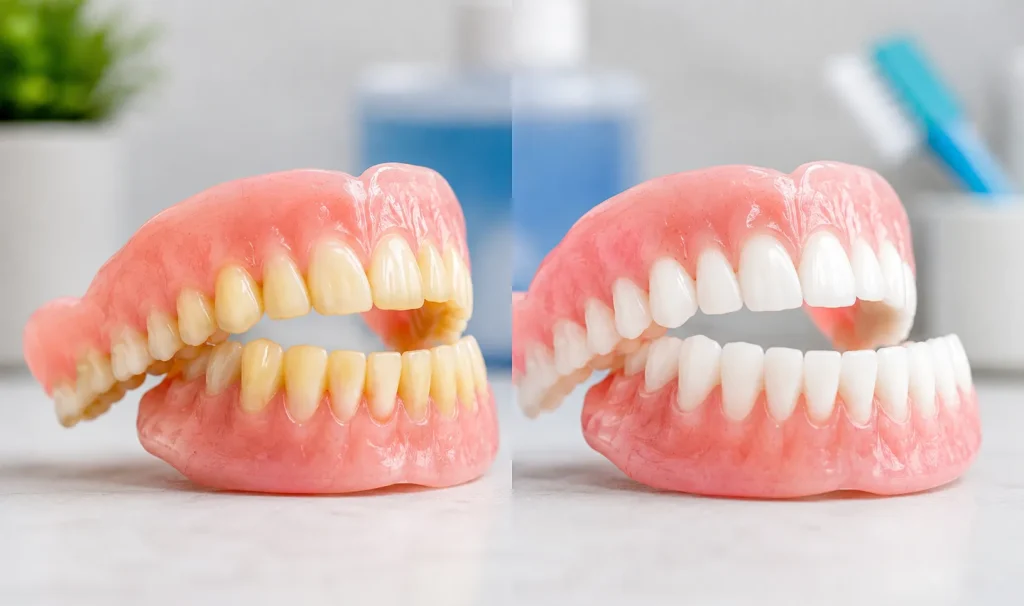
If your dentures aren’t as bright as they used to be, you’re not imagining it, dentures can and do stain over time, just like natural teeth. But when it comes to fixing the problem, dentures need a different approach entirely. This guide explains why dentures discolour, why regular whitening products aren’t the answer, and what actually works to restore their brightness safely.
Why Dentures Stain
Dentures are made from acrylic resin or porcelain rather than natural enamel, and both materials can absorb colour from food and drink over time in a similar way to a coffee cup building up staining. The most common culprits are tea, coffee, red wine, tomato-based sauces and dark berries, all of which contain pigments that gradually work into the surface of the denture. Smoking and tobacco use tend to cause particularly stubborn staining, often with a yellow-brown tint that builds up faster than diet-related staining alone. A cleaning routine that isn’t thorough or consistent will also allow surface stains to set in more easily, making them harder to shift later on.
Why Regular Teeth-Whitening Products Don't Work
It might seem logical to reach for the same whitening strips or gels used on natural teeth, but these products aren’t designed for denture materials and can cause real problems. Hydrogen peroxide whitening treatments are formulated to work on natural tooth enamel, not acrylic resin or porcelain, so they’re unlikely to whiten a denture effectively. Worse, the bleach in these products can actually weaken the denture material over time, and anything containing chlorine can corrode the metal components found in some partial dentures. Whitening toothpaste is another one to avoid, as its abrasive texture, designed to buff enamel, can scratch and dull the smoother surface of a denture instead of brightening it.
Safe At-Home Cleaning Methods
The good news is there are proper, denture-safe ways to keep them looking their best. A daily routine of rinsing after meals and brushing gently with a soft-bristle brush (ideally one designed for dentures) helps stop stains from building up in the first place. Using a non-abrasive denture cleaner rather than regular toothpaste protects the surface from scratching. Overnight soaking in a manufacturer-approved or dentist-recommended denture solution is one of the most effective habits, helping to lift surface staining while the denture is out of the mouth. Denture cleaning tablets are a simple, low-cost option that many wearers use as part of this soaking routine.
Home Remedies: What to Approach With Caution
You’ll likely come across suggestions online for home remedies like baking soda, white vinegar or lemon juice as denture-whitening options. While some of these are discussed as low-cost alternatives, it’s worth treating them carefully rather than as a go-to solution. Baking soda, for example, is abrasive enough to scratch a denture’s surface if used as a brushing paste, and acidic solutions like vinegar or lemon juice can potentially affect certain denture materials or metal components if used too often or left to soak for too long. If you’re tempted to try any home remedy, it’s best to check with your dentist first, particularly if your denture includes a metal framework.
Professional Denture Whitening and Cleaning
For stains that won’t shift with home cleaning, a professional clean at the dental practice is the most reliable option. This typically involves specialist polishing equipment designed specifically for denture materials, safely lifting built-up staining without damaging the surface. The process is usually quick, often taking just a few minutes, and most dentists recommend having it done around once or twice a year as part of routine denture maintenance. It’s generally the best route for anyone dealing with stubborn, long-standing discolouration that daily cleaning hasn’t resolved.
Preventing Future Stains
Alongside your regular cleaning routine, a few simple habits go a long way in keeping stains from building up again. Rinsing your dentures immediately after eating or drinking anything likely to stain, tea, coffee, red wine or tomato-based meals, helps stop pigments from settling in. Sticking to a daily clean and overnight soak, avoiding tobacco products, and limiting how long staining foods and drinks sit against the denture surface will all help keep discolouration to a minimum between check-ups.
When It's Time to Consider Replacement
Not all staining responds to cleaning, even with professional help, and in some cases the discolouration becomes a permanent part of an older denture. If you’re due for a replacement anyway, it’s worth knowing that porcelain tends to be more stain-resistant over the long term compared with acrylic, making it a consideration if staining has been a recurring issue. If your dentures aren’t responding to cleaning the way they used to, it’s a good sign to bring up with your denture clinic at your next check-up.
Conclusion
Dentures need denture-specific care rather than the whitening products designed for natural teeth. A consistent daily cleaning routine, overnight soaking, and regular professional cleans are the safest and most effective way to keep them looking bright. If staining has become stubborn or you’re noticing changes in the material itself, book a check-up with your dentist to find the best next step for your dentures.